Warping and bowing in Laser Cut Materials
Why Does Laser Cut Metal Warp or Bow?
Causes and Prevention
October 2026
What causes laser cut parts to bow?
Sheet metal can contain residual stresses from manufacturing. Most of the time that stress stays hidden and parts come off the laser flat. Sometimes, depending on the part’s shape, size and thickness, cutting releases it and the part bows, twists or curls. This page explains why that happens, what we do to keep it to a minimum, and what to expect if your design is at risk.
Where the stress comes from
Most sheet metal leaves the mill as a coil. It’s rolled down to thickness, wound tightly for transport, then unwound and run through a leveller before being cut into flat sheets. Each of those steps locks stress into the material. Residual stresses can remain balanced within the sheet until cutting changes that balance.
Think of a poster that’s been stored rolled up. Flattened on a table it looks fine, but cut a strip from it and the strip curls back towards the shape it was stored in. Sheet metal behaves in a similar way.
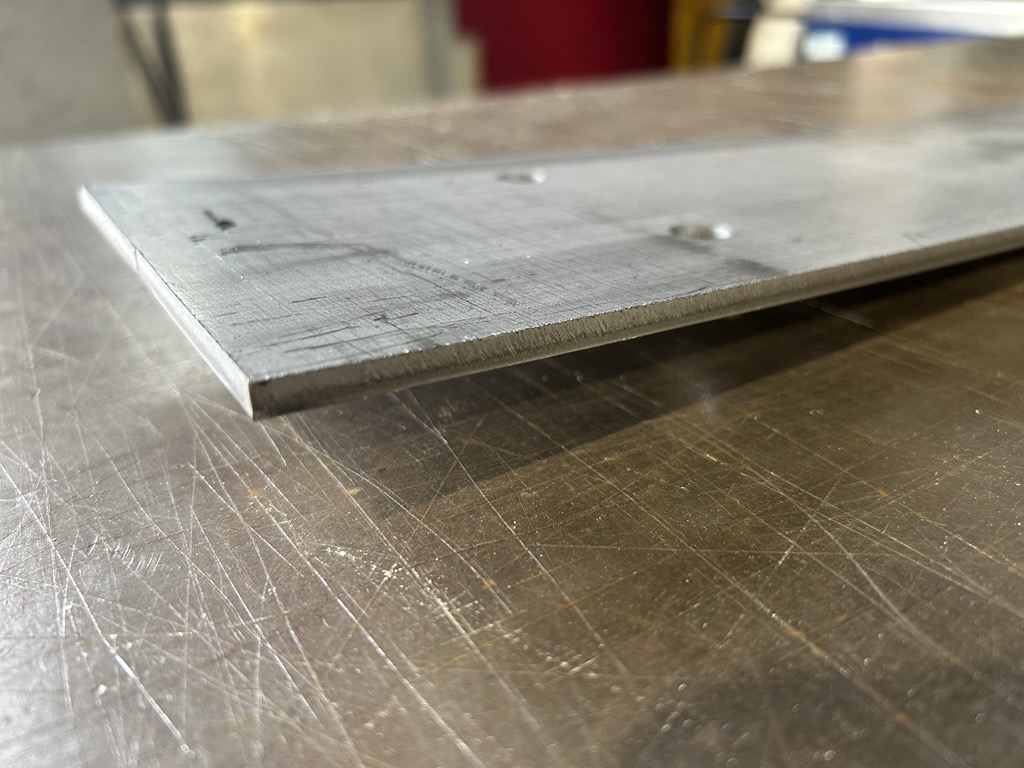
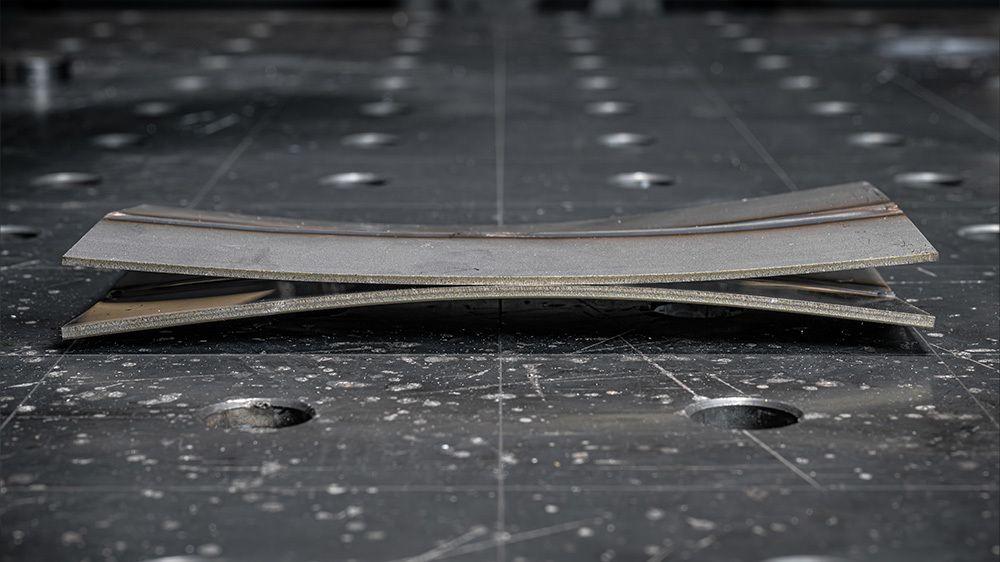
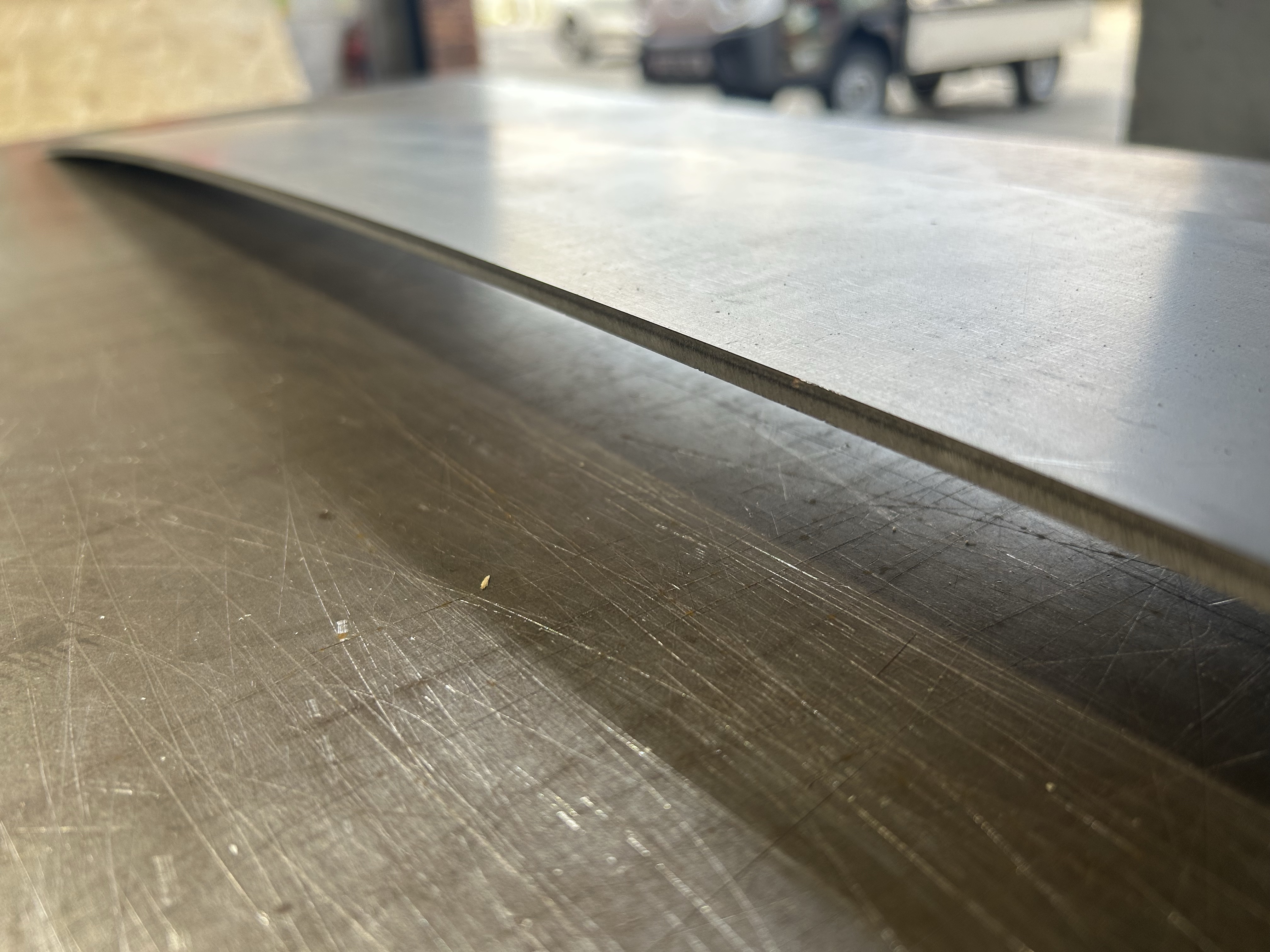
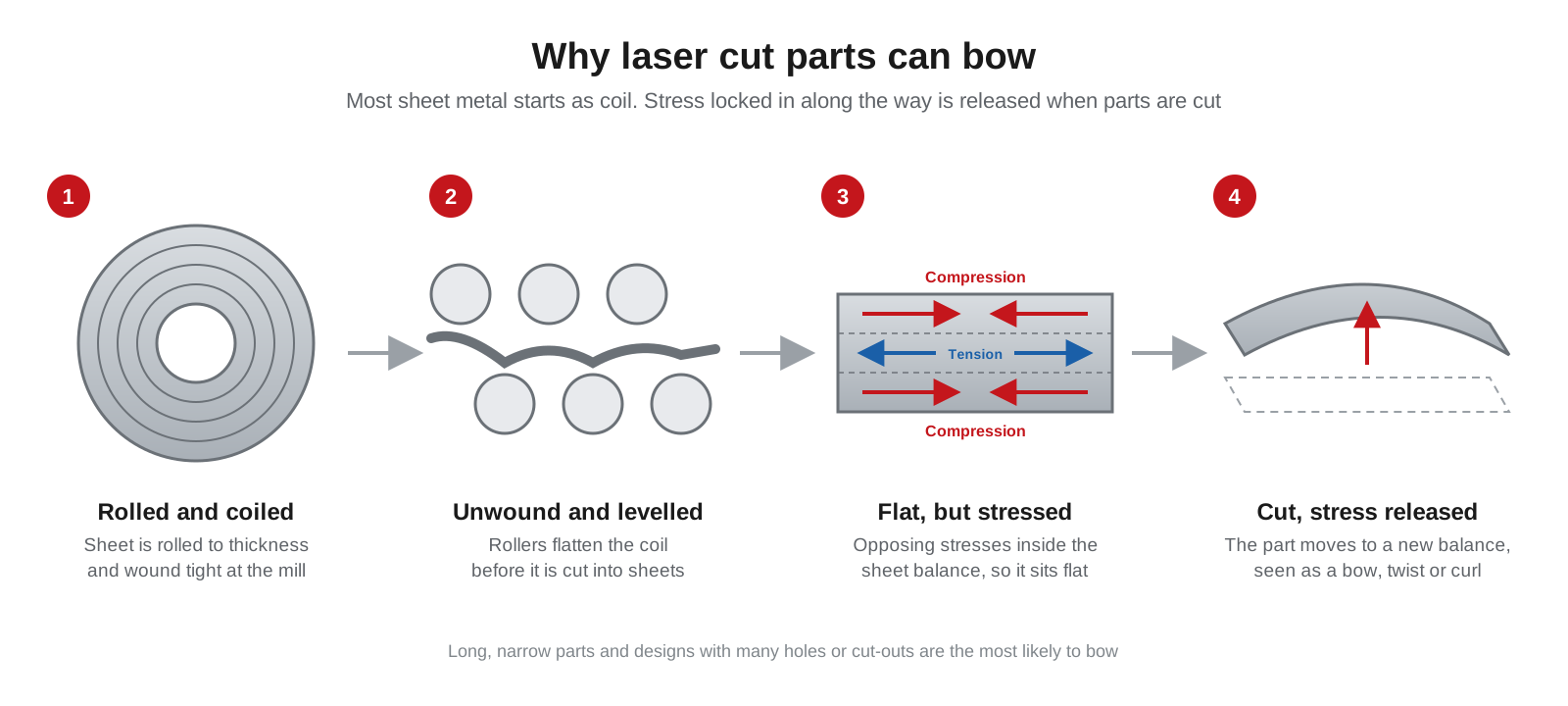
Simplified illustration. Actual stress patterns vary by material, thickness and batch, and it is uneven stress across the sheet that causes a cut part to move.
Stages 1 to 3 happen before the material reaches us. Stage 4 is where we cut it, and why part design matters as much as the cutting itself.
Preventing Warping in laser cut components
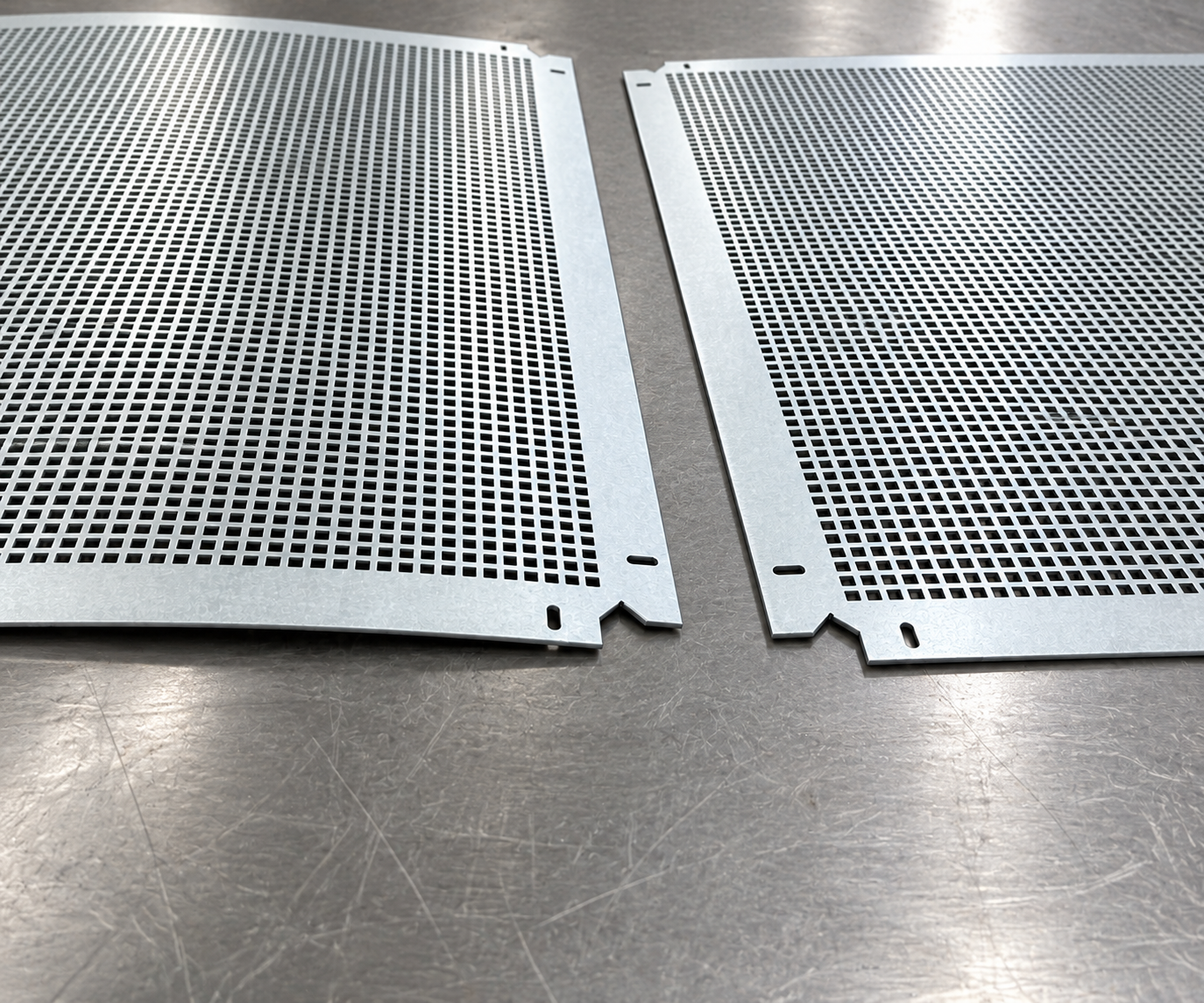
When it comes to laser cutting flat panels, the more material being removed over a certain area, the more likely warping is to occur. Grill-like mesh shapes or long, thin shapes are most likely to warp as the material is removed. Removing more than about 50% of the area starts to increase the odds that the part will warp. If you can remove less area, that will help, but sometimes your design needs to remove more material to reduce the severity.
We review each design before it’s cut, to check for things like how likely it is to warp from our experience. If we think your part has a high risk of warping, we may reach out to you before laser cutting to explain how it might impact your part or see if the design can be altered to help reduce the stress on the material. Sometimes the exact same part can be cut multiple times and not warp the first time, but warp significantly the second time.
Designing parts that stay flat
The biggest influence on bowing is the design itself, and a few small changes at drawing stage make a real difference.
- Leave enough material between features. Narrow webs between holes and slots give stress an easy path to release. Wider sections hold the part together.
- Keep a solid edge. A continuous border around a perforated or patterned area acts like a frame and resists movement.
- Only remove what you need. The more of a part that’s cut away, the less is left to keep it flat.
What if My Laser Cut Parts Warp?
Having a part that’s warped doesn’t always mean the part is unusable, although it may be undesirable. Depending on the application of the part, it may still be functional. In some applications, controlled straightening may be possible. Parts that get assembled may naturally bend back into the correct shape as they are adjoined to other pieces.
The mesh part pictured is an example of what can happen to a perfectly flat piece of steel, this is considered as extreme bowing. Bowing to this piece could be reduced by decreasing the number of holes within the design.
We’ll do our best to let you know if parts in your order are likely to warp during the quotation stage and will highlight this risk within our email communication to you.
If you choose to proceed with the risk and your parts do end up warping or bowing during laser cutting, we may reach out to you to discuss what can be done, however, the parts may not be rejectable, and recuts may have the same outcome.